The Tanimbar Blueprint: Why the Future of Carbon Must Start with Its People
News
 Willie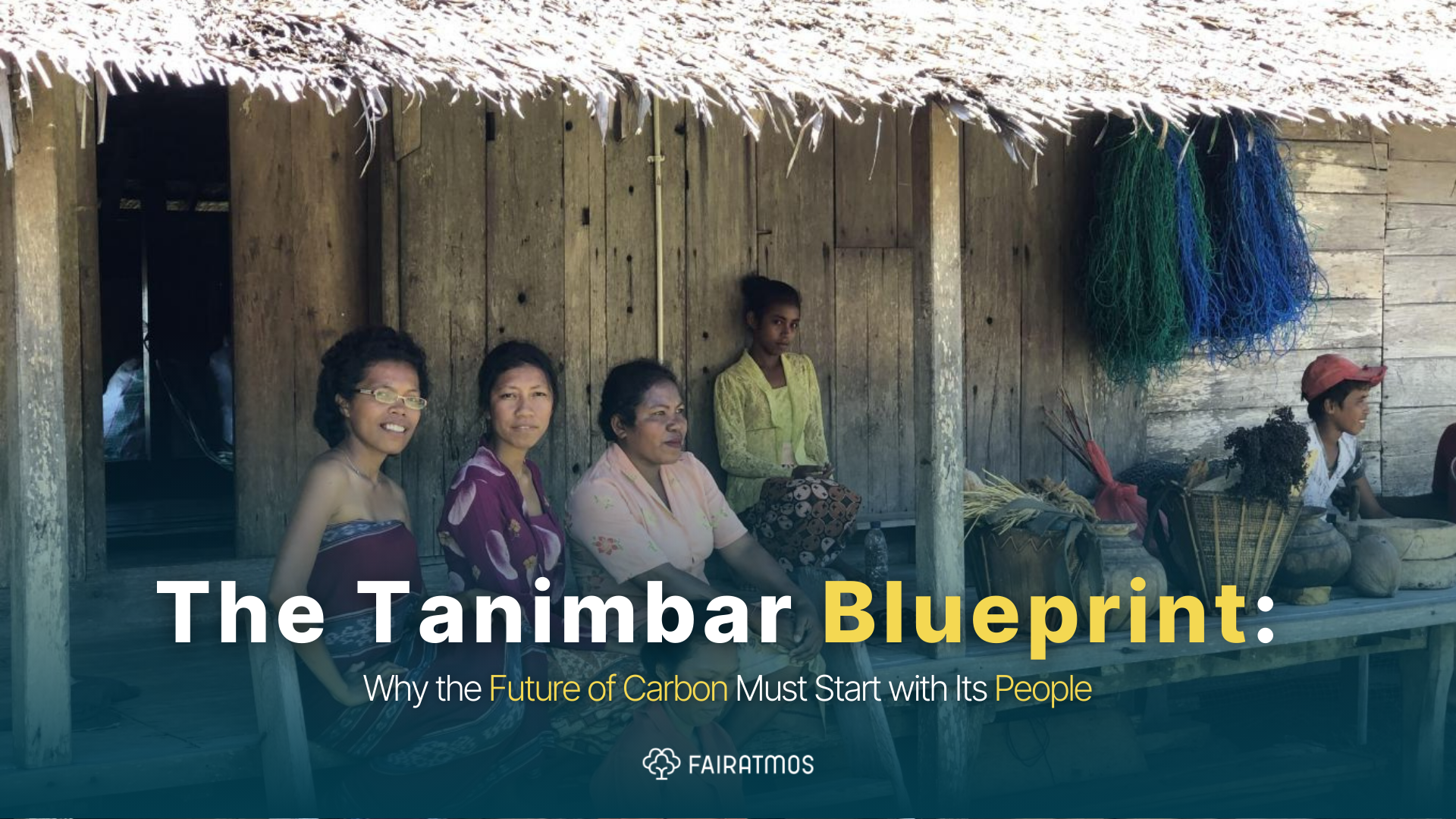
In the global capital markets, the conversation around climate change is often reduced to a cold balance sheet of metric tons and abstract credits. But at the edge of the world, where the Banda Sea meets the primary forests of the Tanimbar Islands, the math of sustainability is far more human.
At Fairatmos, we have always operated under a singular conviction: a carbon project that fails the local community or the local ecosystem is not a project worth pursuing. We do not view biodiversity and social equity as secondary "co-benefits" to be tacked onto a spreadsheet. They are the bedrock. Without the long-term stewardship of the people who have lived among these trees for generations, carbon sequestration remains a temporary fix, vulnerable to the very pressures we seek to mitigate.
Take, for example, our latest work in the Tanimbar archipelago, a project that serves as a testament to this "nature-first" philosophy.
The Human Frontier
While many look at the 45,424 hectares of eligible land in Tanimbar and see a vast carbon sink, we see 22 villages at a critical crossroads.
Our interim field findings from October 2025 reveal a stark reality: 85% of these households are predominantly agrarian, operating on the razor’s edge of poverty with monthly incomes often falling below IDR 1 Million, well under the regional minimum wage. For these families, the forest is not a commodity; it is their survival.
Our mission is to pivot this local economy from subsistence to resilience. By empowering 23 Social Forestry Groups to lead our afforestation and monitoring efforts, we aren't just creating seasonal jobs but we are formalizing the role of the community as the rightful, salaried guardians of their own land. Through rigorous Free, Prior, and Informed Consent (FPIC) and transparent grievance mechanisms, we ensure that as the project scales, the community does not just watch from the sidelines; they own the results.
A Sanctuary Under Watch
Beyond the social fabric lies an "exceptional" ecological theater. Tanimbar is a place of evolutionary wonder, home to species that exist nowhere else on the planet.
During our recent surveys, which deployed 54 fauna transects and 46 field participants, we documented 106 fauna species, including the iconic Tanimbar Corella and the Tanimbar Megapode. These are our "trigger species" living indicators of habitat integrity. When we protect the habitat of the Critically Endangered Calophyllum macrophyullum or the Endangered Pterocarpus indicus (Linggua), we are protecting a genetic library that has survived for millennia.
The Vision
The data from our 54 biomass plots and 21 soil samples suggest a potential production of between 6.2 and 9.2 million carbon credits over the next four decades. But the true metric of success for the Tanimbar project won't just be the volume of credits issued.
Success will be measured by the stability of a village's income, the height of a newly planted native hardwood, and the continued song of the Corella in a forest that remains standing. We are proving that the most effective way to protect the planet is to invest in the people and the life-forms that have been protecting it all along.
Join the Movement
For Investors & Buyers: Are you ready to move beyond traditional offsets and toward high-impact, transparent environmental assets? Align your portfolio with projects that prioritize community resilience and biodiversity at their core. [Explore Impactful Opportunities at Atmosfund]
For Asset Owners: Do you manage land that could be part of the global climate solution? Transform your assets into a force for ecological restoration and community empowerment. Discover your land’s potential and see if you qualify for a high-integrity carbon project today. [Check Your Project Eligibility with AtmosCheck]
For Buyers & Investors
Explore verified, high-impact projects like this through AtmosFund & invest in the future of sustainable landscapes.
Explore AtmosFundFor Landowners & Project Starters
Learn how your land could qualify for carbon project development through AtmosCheck.
Sign Up Now