The Archipelago Strategy: Securing Project Certainty for ARR in the 2026 Philippine Carbon Market
News
Others
 Willie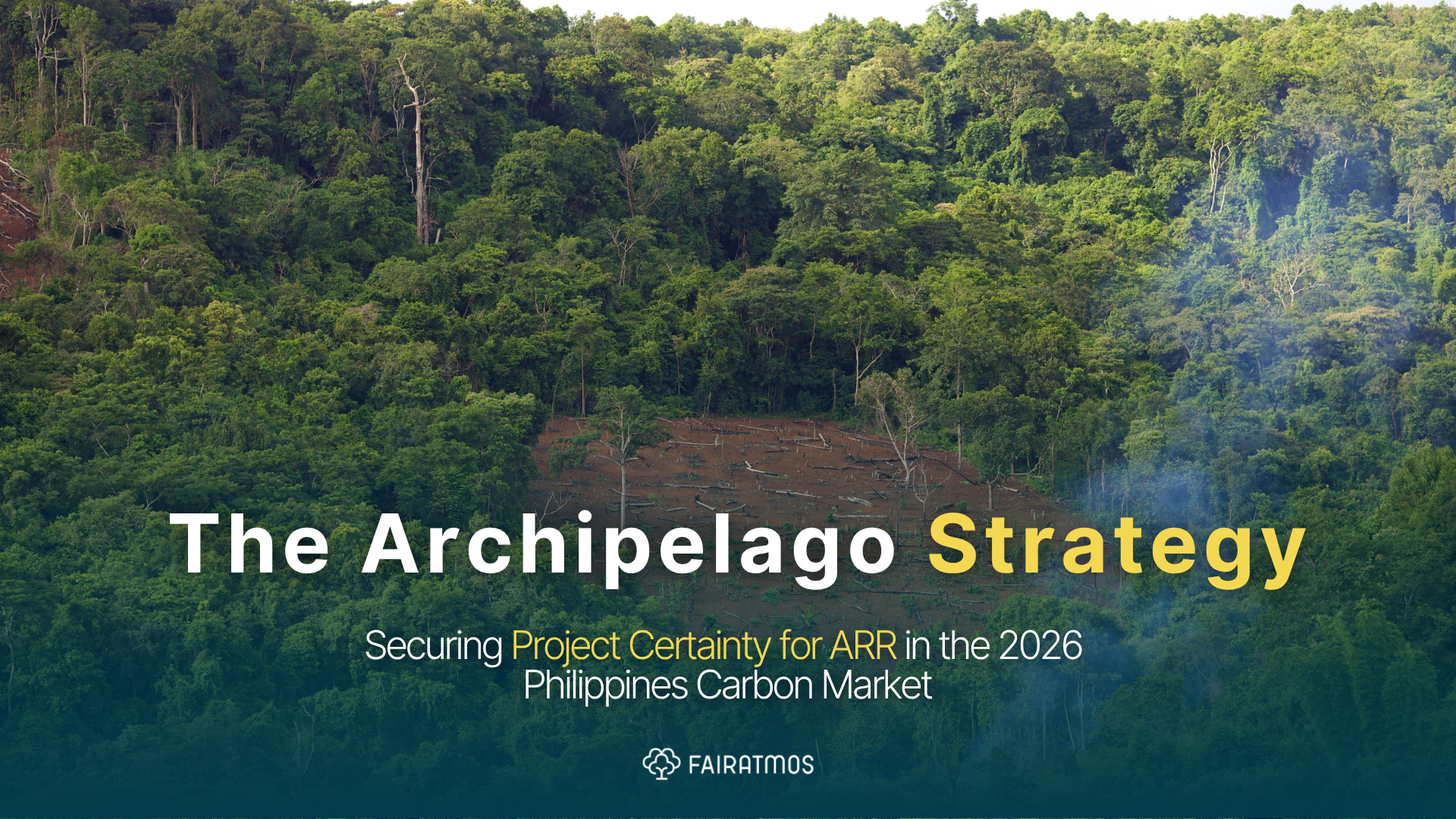
The era of "top-down" conservation is over. In 2026, global accreditation standards and the Philippine Department of Environment and Natural Resources (DENR) have established a new reality: an ARR Carbon Project is only as permanent as its community's commitment.
Whether executing terrestrial reforestation or pioneering Blue Carbon initiatives in coastal mangroves, your ability to generate high-integrity Carbon Credits depends entirely on deep-rooted local integration.
1. The 2026 Landscape: Carbon Rights as Community Capital
As the Philippines hosts the ASEAN Climate Forum 2026, the national agenda has institutionalized the Voluntary Forest Carbon Market (VFCM) Roadmap. This framework reclassifies ARR from a purely environmental activity to a primary driver of "Inclusive Regional Growth."
For an ARR developer, the stakeholder map is no longer limited to the end-buyer seeking a Carbon Offset; it is centered on the Indigenous Peoples (IPs) and local communities who serve as the primary land stewards. With Tier-1 credits now requiring exhaustive "Social Safeguards," demonstrating that a project enhances the local bio-economy is a prerequisite for verification.
2. The Devolution Factor: The "Barangay" as a Strategic Partner
A pivotal shift in 2026 is the maturity of Executive Order No. 103 (s. 2025), which finalized the full devolution of environmental governance to Local Government Units (LGUs). This has decentralized authority, moving the center of gravity for forest management from Manila to the local provinces.
The Power of Local Stewardship
Today, the Barangay (neighborhood) council is the ultimate arbiter of operational continuity.
-
The Risk: If a project is perceived as "Carbon Land Grabbing," local friction will lead to sapling mortality or anthropogenic forest fires, directly impacting your project's buffer pool and credit yield.
-
The Solution: When the community is integrated as a formal partner, receiving dividends through nursery management and monitoring, they become your front-line defense, ensuring the permanence of the carbon stock.
3. Deep Integration: Moving Beyond Traditional CSR
In 2026, the industry has replaced superficial Corporate Social Responsibility with Deep Integration. The most resilient Carbon Projects are those that embed local Micro, Small, and Medium Enterprises (MSMEs) into the ARR value chain.
-
The Strategy: Avoid "monoculture" thinking. By implementing multi-strata agroforestry, you allow communities to derive immediate income from non-timber forest products (NTFPs) while the primary Landscape Restorationmatures.
-
The Result: This synergy ensures that local survival is aligned with forest survival. The community protects the project because their recurring financial health is inextricably linked to the sequestration of carbon.
4. Digital MRV: Transparency through the "Subaybayan" Revolution
In 2026, the DENR’s SUBAYBAYAN Portal has become the digital backbone for project monitoring. For developers aiming for high-integrity Carbon Offsets, adopting a "Glass Box" approach is no longer optional.
-
Real-Time Accountability: Utilizing satellite imagery and AI-driven Digital MRV (Measurement, Reporting, and Verification) allows stakeholders to track biomass growth in real-time.
-
Social Transparency: Sharing this data with local leaders eliminates the "information asymmetry" that often leads to rent-seeking or disputes. When data is democratized, project certainty increases.
5. A Professional Entry Framework
To secure a project in the current market, developers must utilize a phased engagement strategy designed for long-term stability.
-
Stage I: The Socio-Legal Audit (Months 1-3): Conduct a comprehensive land-tenure assessment, focusing on the Certificate of Ancestral Domain Title (CADT). De-risking begins with understanding historical land use rights.
-
Stage II: Co-Designed Restoration (Months 4-6): Rather than dictating species, collaborate with local botanists and elders to select native species that provide both ecological resilience and cultural value.
-
Stage III: The Community Liaison Office (Ongoing): Establish a permanent, local presence that isn't just a PR desk, but a functional operational unit that aligns project milestones with LGU development goals.
Conclusion: The Soul of the Asset
In the ARR sector, it is easy to focus solely on the technicalities, sequestration rates, additionality, and leakage. But in the 2026 Philippine market, these metrics are simply the byproduct of your social capital.
Project certainty is found where Innovation meets Empathy. By treating the local community as your most vital partner in Landscape Restoration, you transform a reforestation effort into a robust, recurring climate asset. When the community wins, the integrity of your Carbon Credit is guaranteed.
Sources & Industry References
-
DENR Administrative Order (2026-01): Framework for Voluntary Carbon Market Participation.
-
Executive Order No. 103 (s. 2025): Extension of Full Devolution of Environmental Functions to LGUs.
-
ASEAN Climate Secretariat (2026): Regional Guidelines on Nature-Based Solutions and Social Safeguards.
-
ADB Special Report (2026): The Economic Impact of Blue Carbon and ARR in Southeast Asia.
-
Public PPP Center: Updates on RA 11966 regarding Private Investment in Natural Capital
For Buyers & Investors
Explore verified, high-impact projects like this through AtmosFund & invest in the future of sustainable landscapes.
Explore AtmosFundFor Landowners & Project Starters
Learn how your land could qualify for carbon project development through AtmosCheck.
Sign Up Now