Beyond the Planting: How Fairatmos Engineers High-Survival Mangrove Ecosystems
Downloadable Reports
Science
 Willie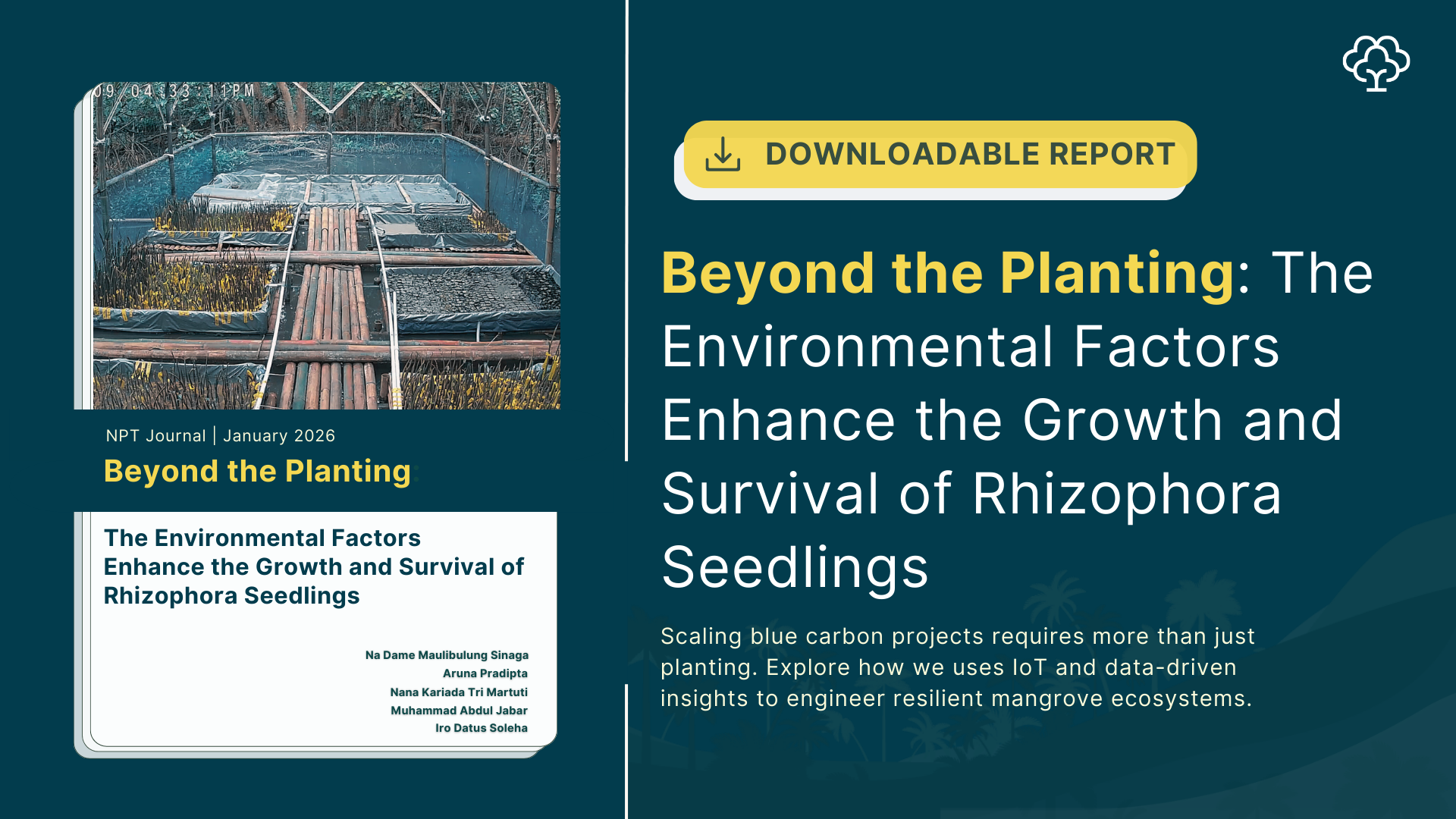
In the global effort to mitigate climate change, planting a tree is only the first step. To achieve true, scalable impact, we must ensure that every seedling planted has the resilience to reach maturity. Without rigorous data and technical oversight, restoration efforts risk high mortality rates and lost potential.
At Fairatmos, we believe that the success of Nature-Based Solutions is rooted in scientific excellence. Our Nursery and Planting (NPT) team has dedicated the past year to optimizing the "nursery phase", the most critical window for seedling development. To ensure statistically significant results, our research analyzed a robust sample of a total 3,000 seedlings over a two-month (eight-week) intensive monitoring period. This scale allowed us to precisely evaluate how environmental factors like light and salinity impact the early-stage survival and quality of high-potential restoration species.". Today, we are proud to release our latest deep-dive (DLC) technical report, published in the journal Biosaintifika (Vol. 17, 2025).
This research represents a collaborative milestone between Fairatmos and our academic partners. We would like to recognize the authors who led this study:
-
Na Dame Maulibulung Sinaga (Lead & Corresponding Author, Fairatmos)
-
Aruna Pradipta (Fairatmos)
-
Nana Kariada Tri Martuti (Universitas Negeri Semarang)
-
Muhammad Abdul Jabar (Universitas Indonesia)
-
Iro Datus Soleha (Chulalongkorn University)
Precision Restoration through IoT Conducting the study at the Pantai Indah Kapuk (PIK) Mangrove Ecotourism Park, Fairatmos team implement an Internet of Things (IoT)-integrated water control system. By automating tidal cycles and stabilizing water supply, the team was able to reduce seedling mortality to below 10%, a significant improvement over traditional community nursery methods.
Key Findings: Unlocking Optimal Growth The study provides a technical blueprint for the growth of Rhizophoraspecies, revealing the environmental "sweet spots" for success:
-
98.8% Survival Rate: Under optimized light treatments (no shade), the team achieved near-perfect survival for R. mucronata.
-
Salinity Optimization: Maintaining salinity between 15-20 ppt was found to trigger the best vertical growth, with seedlings reaching an average height of 56.78 cm.
-
Structural Integrity: Direct light exposure was proven essential for lignin biosynthesis, resulting in thicker, more resilient stems (up to 0.698 cm in diameter).
For us, this research is more than just a publication; it is the framework we use to ensure our projects deliver high-quality, verifiable carbon credits. By applying these scientific insights, we are moving the industry toward a future of precision restoration.
Download the full technical journal to explore the data behind our methodology.
For Buyers & Investors
Explore verified, high-impact projects like this through AtmosFund & invest in the future of sustainable landscapes.
Explore AtmosFundFor Landowners & Project Starters
Learn how your land could qualify for carbon project development through AtmosCheck.
Sign Up Now